

The Science:
How Brain Training Works
Your brain is constantly adapting. Every thought, habit, emotion, and behavior is supported by networks of neurons communicating through electrical activity. Neurofeedback works by measuring that activity in real time and providing the brain with information about its own performance. When given accurate feedback, the brain can learn to recognize inefficient patterns and strengthen more effective ones.
This process is known as neuroplasticity: the brain's ability to change, adapt, and reorganize itself throughout life.
At AXIA, every training program begins with understanding how your brain is functioning today.
Axia Wellness
✳︎
A Space to Exhale and Rewire
✳︎
Axia Wellness ✳︎ A Space to Exhale and Rewire ✳︎
-
The first step is gathering objective data. Using a non-invasive EEG assessment, we measure the electrical activity produced by your brain and identify patterns across different regions of the cortex. These patterns can provide insight into how your brain is regulating attention, arousal, stress response, emotional processing, recovery, and cognitive performance. This is not a process to label or diagnose. The goal is to establish a baseline and better understand how your brain is currently operating. Think of it as a map before beginning a journey.
-
No two brains are identical. That's why every neurofeedback program begins with an individualized training strategy. We combine your assessment findings, goals, lifestyle factors, and clinical observations to design a protocol tailored specifically to you. Whether your goal is improved focus, better sleep, greater emotional balance, or enhanced performance, your training plan is built around the patterns revealed by your data.
-
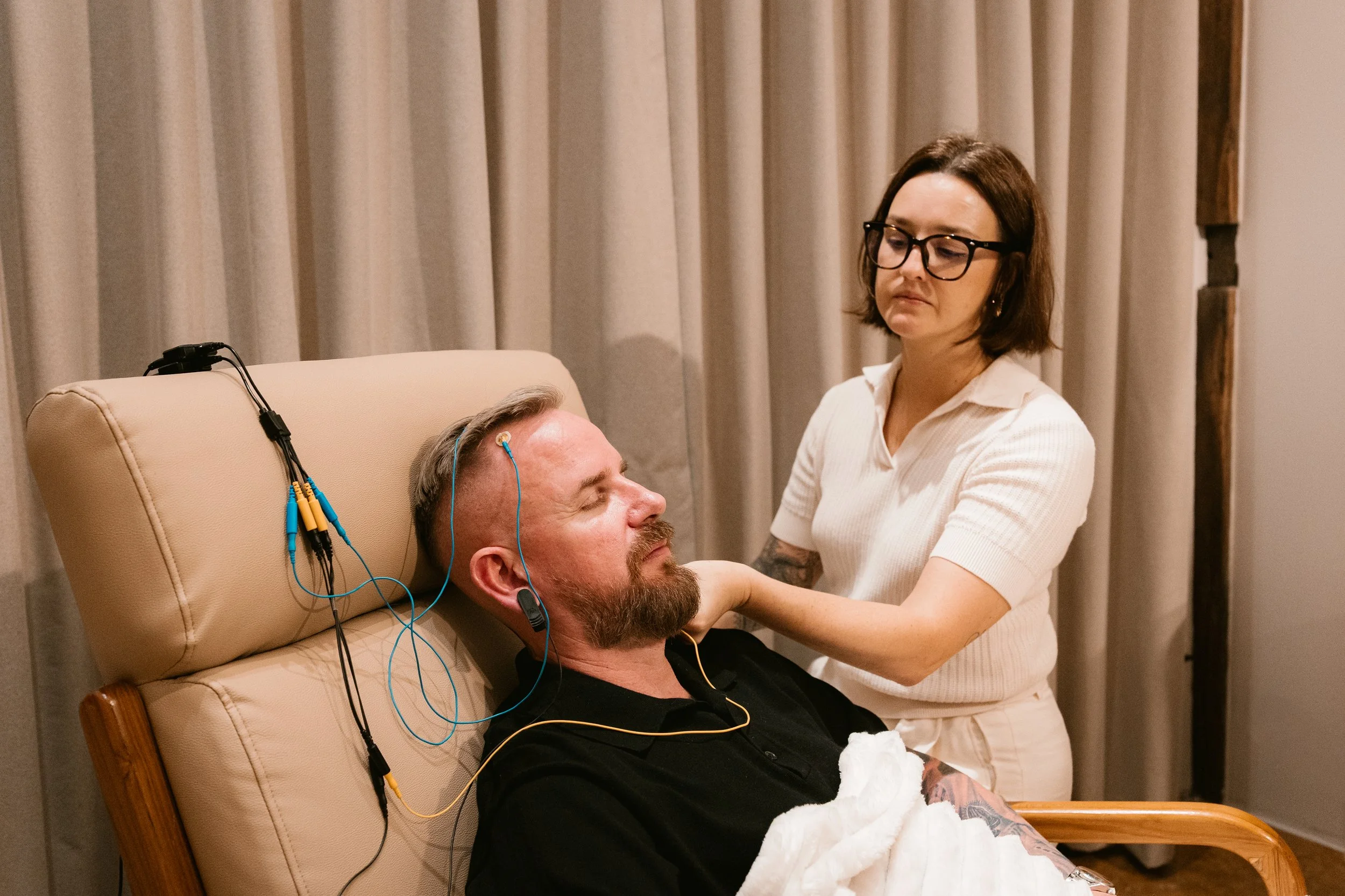
During a neurofeedback session, sensors placed on the scalp measure your brain's electrical activity in real time. The sensors do not send anything into the brain. They simply listen. As your brain activity changes, specialized software provides immediate visual and auditory feedback. When the brain produces more efficient patterns, it receives a reward signal, often in the form of a smoother video, brighter display, or positive auditory cue. This process is based on operant conditioning, the same fundamental learning principle through which humans develop skills and habits. Over time, the brain learns to recognize and repeat more efficient patterns on its own. No conscious effort is required. The brain simply learns from feedback.
The Power of Neuroplasticity
Most people spend years trying to change their thoughts, behaviors, or habits. Neurofeedback works at a different level. Rather than focusing solely on the outputs of the system, it trains the system itself. As the brain becomes more flexible and efficient, many people notice improvements in areas such as:
Focus and concentration
Emotional
regulation
Sleep quality
Cognitive
performance




Mental clarity
Stress resilience


A healthy brain is flexible. It can focus deeply, recover fully, remain calm under pressure, and adapt to changing demands without becoming stuck in patterns that create unnecessary friction.
Neurofeedback helps strengthen this flexibility, supporting a brain that can respond more effectively to whatever life requires.